Open Cockpit or Closed Canopy: Two Silhouettes, Two Views
Open cockpit or closed canopy: see how each racing-car shape frames the driver, bodywork, and speed, then choose the silhouette that suits your view.
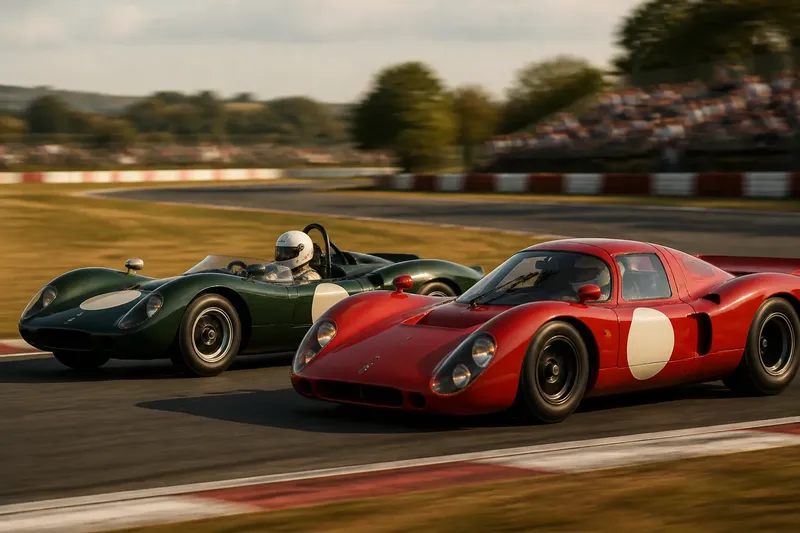
Open cockpit or closed canopy changes what a racing car lets you see before it changes what the car seems to be. An open car puts the driver’s helmet and shoulders into the outline; an enclosed car folds the driver into a continuous shell. If you are choosing which form to watch, photograph, draw, or follow around a circuit, start with the part of the car you want to read.
Neither silhouette tells the whole story of a car’s engineering or pace. Each does, however, make different things visible from the fence, the grandstand, and the trackside camera. The useful choice is less “Which looks faster?” than “What do I want the shape to show me?”
What does an open cockpit put in view?
In an open-cockpit car, the helmet sits above the bodywork as a distinct, moving point. Depending on the design, the driver’s shoulders and arms are visible too. That human outline gives the car a clear scale: the viewer can compare the low body, exposed head, and surrounding track without having to infer where the driver is.
The open form also makes small movements legible. A helmet turning toward an apex, a slight change in the driver’s posture, or a hand moving on the wheel may catch the eye. These details are easiest to see when the car is close, moving more slowly, or viewed from a position where the cockpit is not hidden behind the bodywork.
Choose the open silhouette if your interest is the driver as part of the car’s visible composition. It suits close trackside views, illustrations that emphasize the human-machine relationship, and fans who like to follow a helmet’s position through a corner. At speed, though, the driver can become a small patch of color. The openness is a design feature, not a promise that every seat will reveal every gesture.
What does a closed canopy change?
A closed canopy gives the car a more continuous upper outline. The windscreen and roof connect the nose to the rear bodywork, so the eye tends to travel along the shell rather than stopping at an exposed helmet. Reflections, tint, framing, and the canopy’s curve determine how much of the cockpit remains visible.
From a distance, that uninterrupted shape can make the car read as a single object cutting through the scene. The driver may still be visible through the canopy, but often as a face or helmet behind glass, rather than as a figure set directly into the car’s outline. A bright reflection can erase that view; a different angle can reveal it again.
Choose the enclosed silhouette if you want to study the body as one flowing form, or if the graphic appeal of a roofline and windscreen matters more than a clear view of the driver. It can make a moving car look compact and sealed. The same enclosure may also hide the human cues that make an open cockpit easy to read at a glance.
Which silhouette fits your viewing situation?
- You want to follow the driver. Favor an open cockpit, especially from a close position or a corner where the car’s side is visible. The helmet remains an obvious reference point.
- You want to read the whole body shape. Favor a closed canopy. Its roof and windscreen give the upper bodywork a connected outline that is easy to trace against the track.
- You are watching from far away. Consider the car’s overall contrast and outline, not only the cockpit. A closed canopy may read as a cleaner mass; an open car’s helmet can add a small but distinct point of color.
- You are photographing or sketching passing cars. Pick the form that suits the detail you can hold in the frame. An exposed helmet gives a strong focal cue, while a canopy rewards attention to reflections, curves, and the relationship between glass and body panels.
- You are comparing two cars in the same scene. Look for the difference in their upper edges: one places the driver above the body, while the other carries the roofline over the driver. That contrast stays readable even when badges and fine details do not.
Say you are sketching from a general admission bank at a bend, with cars appearing briefly between barriers. If the driver’s posture is the point of the drawing, an open cockpit gives you a visible helmet to place first, then the body around it. If the drawing is about a car’s shape against the corner, a closed canopy offers a continuous roofline to follow. In either case, simplify the passing form before trying to capture small cockpit details.
Why can the same car look faster in one view?
Speed is partly a matter of motion and partly a matter of what the eye can track. An open cockpit gives the viewer a human reference point. The helmet appears to move with the body, which can make the car’s low stance feel especially close to the ground. A closed canopy removes that exposed reference, so attention can shift to the shell’s shape and the way it cuts across the background.
Neither effect is a reliable measure of actual speed. A car passing broadside may look dramatic because its full length is visible; the same car seen head-on may appear to arrive without much warning. Track position, camera angle, background, and the car’s paint scheme all alter the impression. A plain analogy: a clear jar shows what is inside, while a polished container draws attention to its surface. Neither changes what the object is doing.
For spectators, this is a useful distinction. If the sensation you want comes from seeing a driver work within the car, the open shape often supplies more visible cues. If you respond to a clean, uninterrupted machine form, a canopy may sharpen the impression of speed by keeping the eye on the body’s movement.
What should you look for in photographs and close views?
With an open cockpit, check how much of the driver is actually visible from the angle you have. A high side view may show the helmet clearly; a low front view can let the cockpit edge and bodywork mask much of the figure. Notice whether the helmet’s color stands apart from the car, since contrast can make the driver easier to follow in a crowded frame.
With an enclosed car, look at the canopy as a boundary, not simply a window. Its frame may divide the roof from the windscreen, and reflections can make the cockpit alternately transparent or opaque as the car changes direction. A photograph that hides the driver is not necessarily a poor one; it may be emphasizing the car’s sculpted surface instead.
For a fair visual comparison, use similar viewpoints and pay attention to the same features: the upper outline, the driver’s visibility, and the transition from cockpit to bodywork. The comparison becomes less useful if one image is close and low while the other is distant and elevated. A matched view lets the forms do the talking, which is usually preferable to asking a caption to perform engineering.
Which view do readers usually prefer?
Is an open cockpit easier to read from the stands?
Often, yes, because the helmet gives the eye a distinct point to follow. Distance, barriers, car color, and viewing angle can still make the driver difficult to pick out.
Does a canopy hide the driver completely?
No. The driver may be visible through the glazing, but reflections, tint, framing, and angle affect how clearly. A canopy changes the view; it does not make the cockpit disappear.
Which silhouette is better for a trackside photograph?
Choose an open car when the driver’s visible presence is central to the image. Choose an enclosed car when the continuous body shape, canopy reflections, or roofline gives you the stronger composition.
Can silhouette alone tell me how a car performs?
No. The visible outline identifies a broad design form, not a complete account of its behavior or purpose. Treat appearance as a way into the car’s character, rather than a substitute for technical information.
How should you make the choice?
Choose an open cockpit when you want the driver to remain part of the car’s visible identity. It offers a direct human cue and rewards views that reveal posture and helmet movement. Choose a closed canopy when you want to follow the body’s continuous outline, or when glass, roofline, and surface reflections are the details that hold your attention.
If you are undecided, watch both forms from the same bend or compare images taken from similar angles. Ask what your eye reaches first: the person, or the shell. That answer is a better guide to your preference than a claim that one silhouette is universally more dramatic. When searching for open cockpit or closed canopy comparisons, keep the viewpoint in mind; a car’s shape is only half the picture, and the viewing angle supplies the other half.
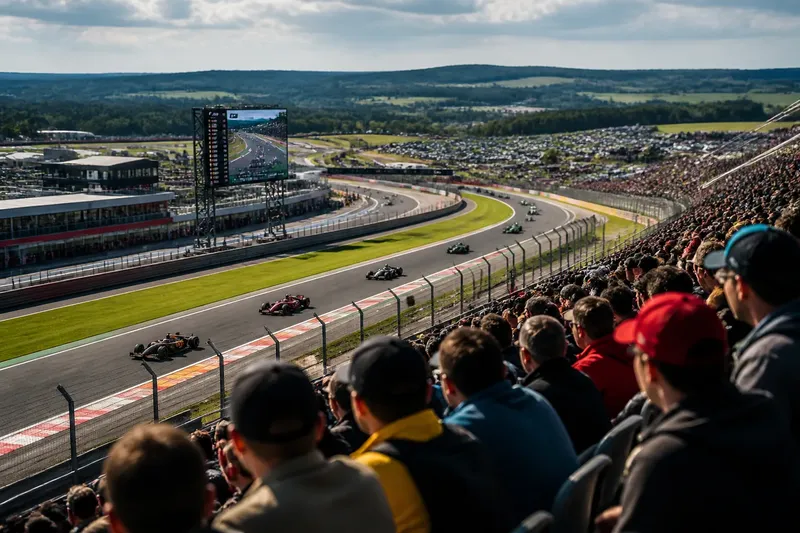
At the circuit, choose a place where the cars cross your line of sight rather than rushing straight toward it. That gives each silhouette a moment to resolve: first the outline, then the driver or canopy, and finally the way the whole car leaves the frame.